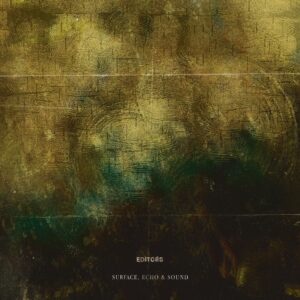
Some albums draw you in as soon as you hit play. Editors have always had a knack for that – Tom Smith’s voice finds a spot just out of reach, carrying a weight that feels both personal and strangely familiar. I’ve followed their ups and downs, through the sharp guitars of the early days and the brooding electronics of EBM. Even when they changed course, something in their sound kept me listening.
With Surface, Echo & Sound, I wasn’t sure what to expect. Would this be a return to their big, shadowy anthems or something riskier? It turns out the answer sits somewhere in between. The electronic layers have eased off, the guitars stand out, and there’s a warmth here that’s new for them. It doesn’t hit as hard as their earliest work, but it grows on you. The more time I spent with it, the more I found in it. This record asks for patience, but for a band I’ve stuck with for so long, that feels fair.
I’ve always thought Editors shine when their songs leave room for uncertainty – when the feeling lingers after the track ends. This album isn’t chasing the urgency of The Back Room, or the dark pulse of EBM, and that’s a relief. They sound comfortable trying out these ideas, even if it means letting go of some old habits.
The title track kicks things off with acoustic guitar and a basic count-in. It feels open, almost casual, far from the dense production of their last album. Smith’s vocals still carry that hint of unrest, but the overall sound is more relaxed. It serves as a gentle signal: the band isn’t just repeating themselves.
Call It In shifts gears. The drums push forward, synths add a flutter of colour – there’s an unsettled tone that harks back to their earlier style, but it never slips into nostalgia. Instead, new touches bring the track to life. The contrast works, showing the band isn’t content to stick with old formulas.
The third track, The Rush, is where things start to click. A mandolin line adds a softer edge, playing against the rhythm section and bright melodies. The focus lands on simple comfort: two people sharing time, looking back, settling into each other’s company. It doesn’t try to be profound, but that’s why it works. The honesty in the lyrics and arrangement stands out as one of the album’s best moments.
Rescue follows, keeping the mandolin but adding more weight in the background. Smith stretches out vocally, letting the melody breathe. The immediate hooks of The Rush aren’t here, but the tension between the brighter instruments and the lyrics gives it staying power.
Editors have always been good at capturing sadness without making it overwhelming. Their songs often say things you can’t quite put to words yourself. Shadow is a strong example, built on echoing guitars and a steady, understated rhythm. The arrangement grows slowly, letting the emotion build without tipping over into melodrama. Inspired by loss, the song stays with the idea of simply being present for someone when things get hard. There’s a quiet tenderness in it, and Smith delivers it in a way that feels honest.
Real stands apart, bringing in traces of Americana. The guitar work is looser, and the melody draws from the early 2000s alternative scene without sounding recycled. It steps away from the band’s usual gloom, and that shift makes it stand out.
Happiness comes at you with a sharper tone. The upbeat title hides a tougher message – a biting vocal and questions that don’t offer easy answers. Musically, it’s more direct, and the energy lifts the album. The contradiction between the track’s title and its edge keeps things interesting; Editors are rarely at their best when everything is simple, and this track knows it.
Much Love picks up on that momentum. The rhythm section tightens up, while synths and guitar lines add some darkness. Smith sounds more forceful, recalling some of the group’s heavier, electronic moments, but without the icy chill of EBM. The track adds some needed grit, showing the album still has a tougher side.
Butterfly Wings brings things down again, playing up a folk-influenced, atmospheric feel. The guitar adds a hint of longing, and the lyrics circle around themes of memory and letting go. While it doesn’t stand out immediately, the way it balances a sense of loss with something warmer deepens the record as a whole.
Seriously brightens things up, sliding into a brighter, nearly ‘80s-inspired groove. The melody is upfront, and the arrangement is lighter. There’s still tension in the lyrics, but the overall effect is more hopeful. It helps offset the darker moments, giving the album some room to breathe.
Closing the record, The Hills We Died Upon loops back to the acoustic feel of the opening track. The production is sparse, and Smith sounds at ease, almost like he’s mulling things over out loud. The song is about holding on to someone when everything else is uncertain. It’s not a dramatic finale; instead, it ends quietly, as if the conversation could keep going.
Surface, Echo & Sound shows Editors aren’t stuck in the past. There’s confidence in the way they’ve let go of heavy electronics and brought in acoustic and folk touches. It’s a different look for them, but it fits.
The songwriting stands out across the album. The Rush and Shadow offer a real sense of connection, while Much Love shows they haven’t lost their edge. Tracks like Seriously keep things from feeling too heavy. This isn’t a band just checking boxes; you can tell they’re still interested in pushing themselves.
I’ve spent a long time listening to Editors, and hearing them find a new direction is satisfying. Tom Smith’s voice still ties everything together, full of the same feeling as ever, but the music around him has shifted. It won’t match everyone’s expectations, but that keeps things interesting.
Surface, Echo & Sound is proof the band is still growing. They’re willing to try new things and let the songs take the lead. When an album stays with you and makes you want to return, that’s a good sign.
Editors still know how to find light in the dark, and after all these years, they haven’t run out of things to say.
Review by James Edmond