ABC at Kelvingrove Bandstand: Two Eras, One Stage
Some summer concerts feel like gigs. Others feel like occasions. ABC’s show at Glasgow’s Kelvingrove Bandstand was the latter.
On Tuesday 11 August, the historic West End amphitheatre hosted Martin Fry and ABC as part of the 2026 Summer Nights programme, with Glasgow indie-rock four-piece Yes And Maybe opening. Doors opened at 6.30pm, setting up an odd pairing on paper: contemporary Scottish guitar music against some of the most polished pop of the early eighties. It worked better than expected.
Kelvingrove was already filling up as Yes And Maybe took the stage. That’s a tough spot for a support act, warming up a crowd who’d mostly come for ABC’s songs, tunes so tied to a specific era that the whole night could easily have slid into pure nostalgia. Yes And Maybe didn’t let that happen.
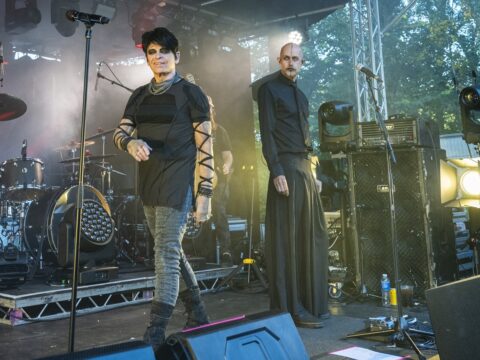
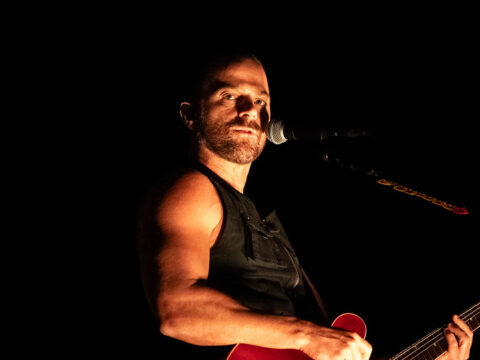
Now performing as a four-piece, they brought a fuller sound than you might expect from a young band. Billed as an indie-rock outfit from Glasgow and Paris, their music actually sits somewhere between indie pop, alternative rock and something more atmospheric.
Their set had a nice directness to it. Instead of chasing the eighties gloss of the headliner, they played to what they do well: guitars, rhythm, melody, and an energy that felt current. The four of them held the stage like a band that’s already found some sense of who they are, even if there’s clearly more to come.
That forward motion mattered. They’re still early in their recording career, with tracks including “Bloody Madness”, “Rebound”, “God Isn’t Real”, “Rumours”, “Train To Nowhere” and the 2026 single “Babylon”. Their debut album, also called Train To Nowhere, points to a band trying things out rather than settling too early.
Live, the songs carry more weight than the recordings suggest. Guitars provide the hooks, the rhythm section fills the outdoor space well, and there’s enough atmosphere to keep things from feeling generic. “Bloody Madness” has a restless pulse. “Rebound” pairs melody with real emotional heft. “God Isn’t Real” goes darker. “Rumours” shows another side again.
The crowd warmed up steadily, which is often the hardest thing for a support act at a heritage show like this one. People hadn’t come to discover someone new, but Yes And Maybe made their set feel like part of the night rather than a placeholder before the main event.


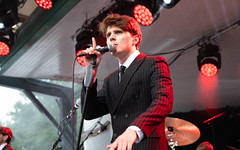


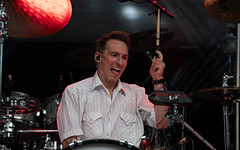


There was something fitting about the pairing, too. Kelvingrove has always been a place where Glasgow’s musical past and present meet, and here was a young local band on the same stage that’s hosted generations of bigger names, opening for a group representing a very different era of pop. The contrast gave the evening some depth.
Yes And Maybe left having done what a good opener should: introduce themselves rather than just fill time. Then the lights changed, and it was ABC’s turn.
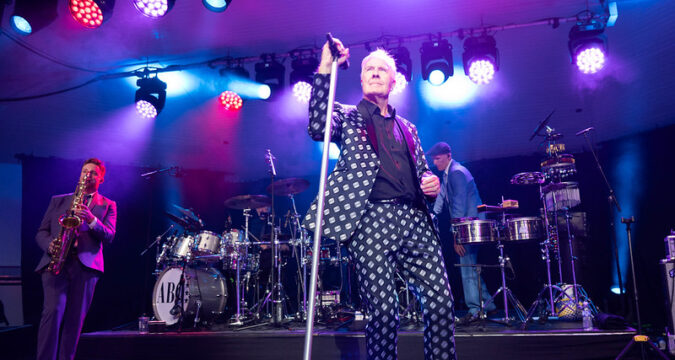
Few frontmen are as instantly recognisable as Martin Fry. His voice, his delivery, and that sense of theatrical polish have defined ABC for more than forty years. Fry’s arrival got a warm reception. Once the first notes hit, it turned into something bigger. This wasn’t just an audience watching a veteran act. It was an audience remembering.
ABC came out of the early eighties determined to make pop smarter and more extravagant. Punk had kicked the doors down, post-punk had started rearranging the furniture, and ABC walked in wearing a sharp suit and ordered champagne. The songs were sophisticated without being distant, romantic without being sappy, polished without losing character. Live, they still hold up.
The opening stretch set the tone fast: sharp keyboards, tight rhythms, clean guitar work, and Fry’s voice cutting through it all. This is music built to be performed with confidence, and confidence has never been in short supply for Fry.
Then came “When Smokey Sings”. The crowd reacted instantly, its soul references and pop sheen proving impossible to resist, and nobody at Kelvingrove needed convincing to sing along. That’s one of the pleasures of seeing ABC live: these songs don’t need introducing. They’re already part of people’s memory. “Be Near Me” came next, its melody sounding just as strong more than forty years on.
But if one song sums up ABC’s particular style, it’s “Poison Arrow”. Still theatrical, still precise, with enough drama in the arrangement to stop it becoming just polished pop. Fry delivered it with a mix of elegance and bite, and the crowd matched him.
By this point the bandstand was fully locked in, its old architecture becoming part of the show as the evening darkened around the amphitheatre and gave the songs a slightly cinematic feel. Then came the one everyone was waiting for: “The Look of Love.”


Few songs have kept their atmosphere this well. The production dates from 1982, but the song itself never sounds stuck there. Lush without being over-the-top, a subtle groove, an instantly familiar melody, and Fry’s voice carrying just the right amount of longing.
At Kelvingrove, it turned into a genuinely shared moment. People sang. Couples exchanged looks. Old memories were clearly surfacing. That’s the strange power of a song like this: it stops being just a recording and becomes something that belongs to everyone who’s ever attached a memory to it.
The rest of the set balanced the obvious hits with deeper cuts that showed the range of the catalogue. “How to Be a Millionaire” brought playful energy, its wit still intact, while “All of My Heart” offered something more emotional. That one landed especially well live, a reminder that ABC were never just stylish eighties pop merchants. There was real ambition under the surface.
That distinction matters. Plenty of acts from that era can tour on nostalgia alone now. ABC have something better: songs that still work once you strip away the period they were made in. The fashion’s gone. The songs are still there.
Fry also seems to understand the crowd doesn’t need constant reminders of the band’s history. There’s no forced attempt to recreate the past. He performs these songs like someone who knows they’ve already survived. And the crowd knows it too. The singing got louder as the night went on, with “Be Near Me”, “Poison Arrow” and “The Look of Love” getting the biggest reactions.
There was real warmth to the whole evening, maybe the most striking thing about seeing ABC in Glasgow in 2026. These songs came out of an era of angular suits, glossy production and New Romantic excess, but nothing about how they’re received now feels cold. They’ve lived with people. They’ve soundtracked relationships, nights out, heartbreaks, weddings, journeys, and things that have nothing to do with the eighties at all. That’s given them a second life.
Kelvingrove suited the mood perfectly. The Bandstand has its own history and its own relationship with Glasgow audiences. On a summer evening, surrounded by the park, it already feels a bit theatrical before a note is played, and ABC made good use of that. They didn’t need much spectacle. The songs did the work.
The playing was tight, the musicianship solid, and Fry remained an easy, natural focal point. His voice has picked up more character over the years, and if anything, that adds to the material rather than taking away from it. There’s a lived-in quality now: “All of My Heart” hits differently coming from someone who’s sung it for decades, “The Look of Love” carries an extra layer of history, and “Poison Arrow” still works because a great chorus is a great chorus, full stop.
Maybe the best part of the night was how the two halves connected. Yes And Maybe are still writing their story. ABC already have theirs written. But both rely on the same basic thing: songs that connect with people. For Yes And Maybe, that’s through contemporary guitar music and a willingness to try things. For ABC, it’s through melodies that have worked their way into the culture. One band is looking ahead. The other is proof that looking back doesn’t mean standing still.
By the end, the gap between the two felt smaller than you’d expect.
Review & Photographs by James Edmond Photography